
Finance teams use a mix of people and digital tools to maintain records, prepare reports, and support decisions. Some businesses also work with nearshore professionals in Latin America. This article examines those approaches, the work they can support, and the controls needed when introducing them.
Related: The Rise of AI-Powered Virtual Assistants: Smarter, Faster Support.

Table of Contents
- Digital finance and nearshore support
- Components of a finance workflow
- Nearshore talent in Latin America
- Industry research
- Putting a plan into practice
- Questions and answers
Digital finance and nearshore support
CFOs and finance teams need accurate records, visibility into cash flow, and information they can use for decisions. Tools for bookkeeping, reporting, and forecasting can help with those tasks, but people still need to review inputs and outputs and resolve exceptions.
A nearshore team may offer overlapping working hours with a U.S. business, making live collaboration easier to arrange. Language skills, experience with accounting standards, and costs vary by person and provider. Assess those details for the role instead of assuming they apply to every hire. Related reading: Morning Routines of Highly Successful VAs and Nearshore Outsourcing Benefits: 7 Reasons Why Companies Choose Latin America Over Asia.
Components of a finance workflow
Bookkeeping and reporting
Bookkeeping tools can assist with invoice processing, transaction reconciliation, and report preparation. Connecting an enterprise resource planning system (ERP) to business intelligence (BI) tools can make reports easier to review. The team should check source data, permissions, and exceptions before relying on an automated result.
Accounting automation and outsourced support
Robotic process automation and AI tools may support accounts payable, accounts receivable, reconciliations, and journal entry preparation. Qualified staff still need to review and approve work under the business's controls. Outsourced finance operations can also support processes such as procurement and reporting, depending on the agreement.
Fractional finance leadership
Some businesses use fractional CFO or financial planning and analysis support for liquidity planning, valuation, budgeting, fundraising, or merger and acquisition preparation. Define the scope and qualifications needed before engaging a provider.
Related: Next-Gen AI Tools Shaping the Future of Digital Business in 2025.
Nearshore talent in Latin America
Mexico, Colombia, Venezuela, and Argentina are among the countries businesses may consider when recruiting remote finance support. Relevant factors include language, experience, overlap in working hours, and familiarity with the company's processes. Check a provider's actual security practices and certifications rather than assuming they apply across a region.
Related: Nearshore HR Solutions: Complete Hiring and Staffing Guide for Growing Companies.
Industry research
Gartner on AI in finance
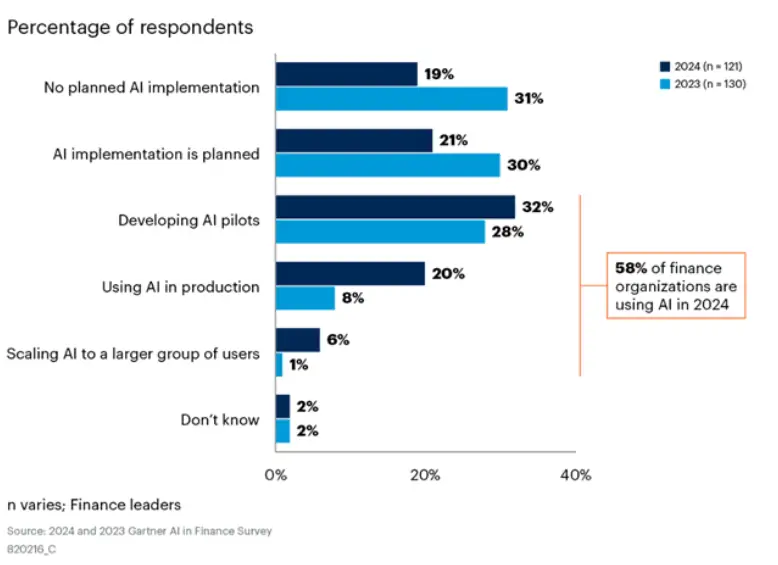
Gartner's September 2024 survey reported AI use among finance functions and discussed applications including process automation, anomaly detection, predictive analytics, and operational assistance. The survey also addressed data quality and talent challenges. Marco Steecker contributed to the Gartner research discussion.
Related: Beyond the AI Hype: Why Human Intelligence Drives Real Growth.
Deloitte on sourcing
Deloitte's 2024 Global Outsourcing Survey examines how organizations combine external providers, in-house teams, global in-house centers, and digital capabilities. It also discusses AI adoption, bringing work back in-house, and decisions about service quality and outcomes alongside cost.
These sourcing choices can inform how a company plans finance support, but a survey of outsourcing practices does not establish the result for a particular business. Learn more about Deloitte or read the survey report. Related: AI-Enhanced Virtual Assistants.
Putting a plan into practice
- Choose a process. Identify repetitive data entry, reconciliation, or reporting steps and define what needs human approval.
- Assess support. Decide which bookkeeping, finance operations, or CFO responsibilities require outside expertise and what qualifications each role needs.
- Connect tools carefully. Review how ERP, BI, and cloud systems exchange information and who can access it.
- Measure results. Track indicators such as cost per transaction, forecast accuracy, and process exceptions against a baseline.
- Train and review. Give finance staff and assistants clear instructions for overseeing automated work and escalating discrepancies.
Start with a manageable pilot and assess the result before expanding. Related: Super VA: Human and AI Virtual Assistants.
Questions and answers
What are corporate finance digital solutions?
They include tools such as ERP systems, process automation, and analytics that support work from bookkeeping to forecasting.
What can nearshore support offer?
Depending on the team, overlapping working hours and shared languages may make collaboration easier. Compare qualifications, controls, and total costs for each option.
Which countries can a business consider?
Mexico, Colombia, and Costa Rica are among the Latin American locations a business might explore for bookkeeping support. Evaluate the actual candidates and service terms.
How can fractional CFO services help?
A qualified fractional CFO may support budgeting, fundraising, or transaction planning without a full-time hire. The scope and cost depend on the agreement.
Where should a finance team start?
Choose a repetitive process such as reporting or bookkeeping, document its controls, and test a small improvement. If nearshore support is appropriate, define the role and review the pilot before expanding.
To discuss remote talent for your business, book a discovery call.